

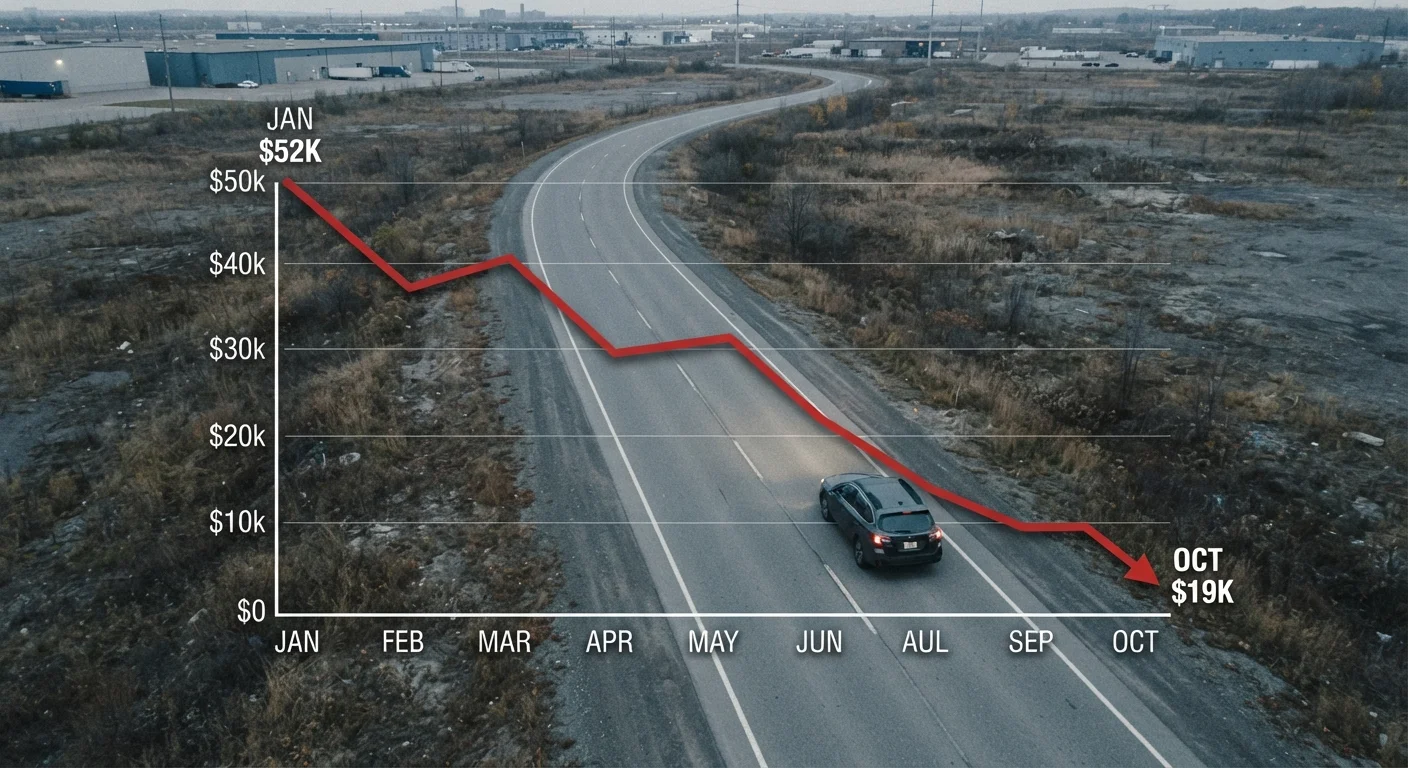
Key Takeaways
- New cars lose a significant portion of their value within the first few years of ownership.
- Luxury and electric vehicles often depreciate faster than mainstream sedans and trucks.
- Buying a used vehicle that has already absorbed its steepest depreciation can reduce your net cost.
- Depreciation affects both buyers and leaseholders, though in different ways.
- Mileage, condition, and market demand all influence how fast any specific vehicle depreciates.
Vehicle depreciation
Vehicle depreciation is the drop in a car's monetary value over time. A car is typically worth less the moment you drive it off the lot, and that gap between what you paid and what it is now worth continues to grow with age and mileage. Depreciation is not a fee you pay in cash, but it is a real financial cost because it reduces the asset you own.
Depreciation is calculated as the difference between a vehicle's purchase price and its current market value (or residual value at the end of a lease term). Lenders and leasing companies use projected depreciation curves to set monthly payments and buyout prices.
Why cars lose value from day one
The moment a new car is registered and driven away from the dealership, it becomes a used vehicle in the eyes of the market. That shift alone accounts for a measurable drop in resale value, separate from any wear or mileage. The reason is straightforward: a buyer purchasing from a private seller or used-car lot takes on more uncertainty than someone buying new with a full factory warranty, and the market prices that uncertainty into what it will pay.
Beyond that initial drop, age and mileage continue to reduce value. Mechanical wear, outdated technology compared to newer models, and expiring warranties all contribute. The vehicle's history also matters: an accident report, even for a minor incident, can reduce what buyers are willing to pay. For a fuller picture of how depreciation fits into the total financial cost of a car, see what the true cost of car ownership looks like for American families.
Which vehicles depreciate fastest and slowest
Luxury vehicles tend to depreciate faster than mainstream models because their high purchase prices are harder to sustain in the used market, where buyers are more price-sensitive. A vehicle that costs significantly more than a comparable mainstream option when new often sells for far less than that premium implies when it is three or four years old.
Electric vehicles have shown variable depreciation patterns. Early models with smaller battery ranges lost value quickly as newer versions with better range came to market. More recent electric models have held value more steadily, but the segment is still maturing and patterns are not yet predictable.
Pickup trucks and certain body-on-frame SUVs have historically depreciated more slowly, partly because demand for these vehicles has remained strong in the U.S. market. However, this is not a guarantee: a shift in fuel prices or consumer preferences can change depreciation rates for any segment.
15-25%
Average first-year value loss for new vehicles
Industry data from automotive valuation sources consistently shows new vehicles lose the largest share of value in year one.
~50%
Typical value remaining after five years
Many mainstream vehicles retain roughly half their original purchase price after five years, though this varies widely by model and market conditions.
2-4 years
Age range where used-car value stabilizes
Vehicles in this age bracket have typically absorbed the steepest depreciation while still offering substantial remaining service life.
Mainstream compact and midsize sedans tend to fall somewhere in the middle. They depreciate meaningfully in the first few years but often stabilize more quickly than luxury or high-tech vehicles.
How timing a purchase around depreciation affects your budget
A vehicle purchased two to four years after its original sale date has typically absorbed the steepest part of its depreciation curve. The buyer at that point pays a price that reflects years of value loss they did not have to experience as the owner. That gap between what the original buyer paid and what you pay is a real financial benefit, even though it does not show up as a line item on any invoice.
This dynamic is one of the core financial arguments for buying used rather than new. The financial trade-offs between new and used cars involve more than just price, including repair risk and warranty coverage, but depreciation is a major part of the calculation.
Depreciation also interacts with how you finance a purchase. If you owe more on an auto loan than the car is currently worth, you are in a position sometimes called being "underwater" or having negative equity. This situation can create problems if you need to sell or if the vehicle is totaled. Understanding how auto loan interest works alongside depreciation gives a more complete view of what a vehicle actually costs over time.
Depreciation and leasing: what buyers often miss
When you lease a vehicle, you pay for its depreciation during the lease term rather than for the full vehicle. The leasing company estimates how much value the car will lose over your contract period, and your monthly payment covers that amount plus interest and fees. A vehicle with faster projected depreciation produces a higher monthly payment, all else being equal.
This is why some vehicles that cost less to buy can cost more to lease than vehicles with a higher sticker price but slower depreciation. The practical differences between buying and leasing go beyond this point, but depreciation is a useful starting framework for comparing the two options.
One cost that intersects with depreciation for both buyers and lessees is gap insurance, which covers the difference between what you owe and what the vehicle is worth if it is written off. Hidden costs families often overlook when budgeting for a vehicle include this and other expenses that depreciation makes relevant but that rarely appear in initial purchase discussions.