

Key Takeaways
- Mulching garden beds with 2 to 3 inches of organic material meaningfully reduces how often you need to water.
- Watering early in the morning reduces evaporation loss compared to midday or evening watering.
- Drip irrigation delivers water directly to roots, cutting waste versus overhead sprinklers.
- Grouping plants by water needs prevents over-watering some while under-watering others.
- Improving soil organic matter helps it hold moisture longer between waterings.
Why outdoor water use adds up faster than most families expect
For many households, outdoor watering is the single largest use of water in the warmer months. The EPA's WaterSense program has found that conventional sprinkler systems are frequently set to run on schedules that do not account for recent rain or actual soil moisture, which means a lot of water gets applied to soil that does not need it.
The good news is that most of the water waste in a home garden is preventable with low-cost habits, not expensive equipment. Whether you grow vegetables, tend flower borders, or both, the core principles are the same: get water to roots efficiently, slow down evaporation, and match your watering schedule to what plants actually need. If you are also starting a food garden, the family vegetable garden guide covers watering basics alongside seed and soil decisions.
Check local watering restrictions first
Many municipalities have seasonal outdoor watering rules, particularly during drought conditions. Before setting up any irrigation schedule, check with your local water utility or city website to confirm what is permitted in your area. Violating restrictions can result in fines, and the rules vary widely by region and time of year.
Practices that make a real difference
The following approaches are grounded in established horticultural practice and are within reach for most families without significant spending. Taken together, they address the main ways gardens lose water before plants can use it.
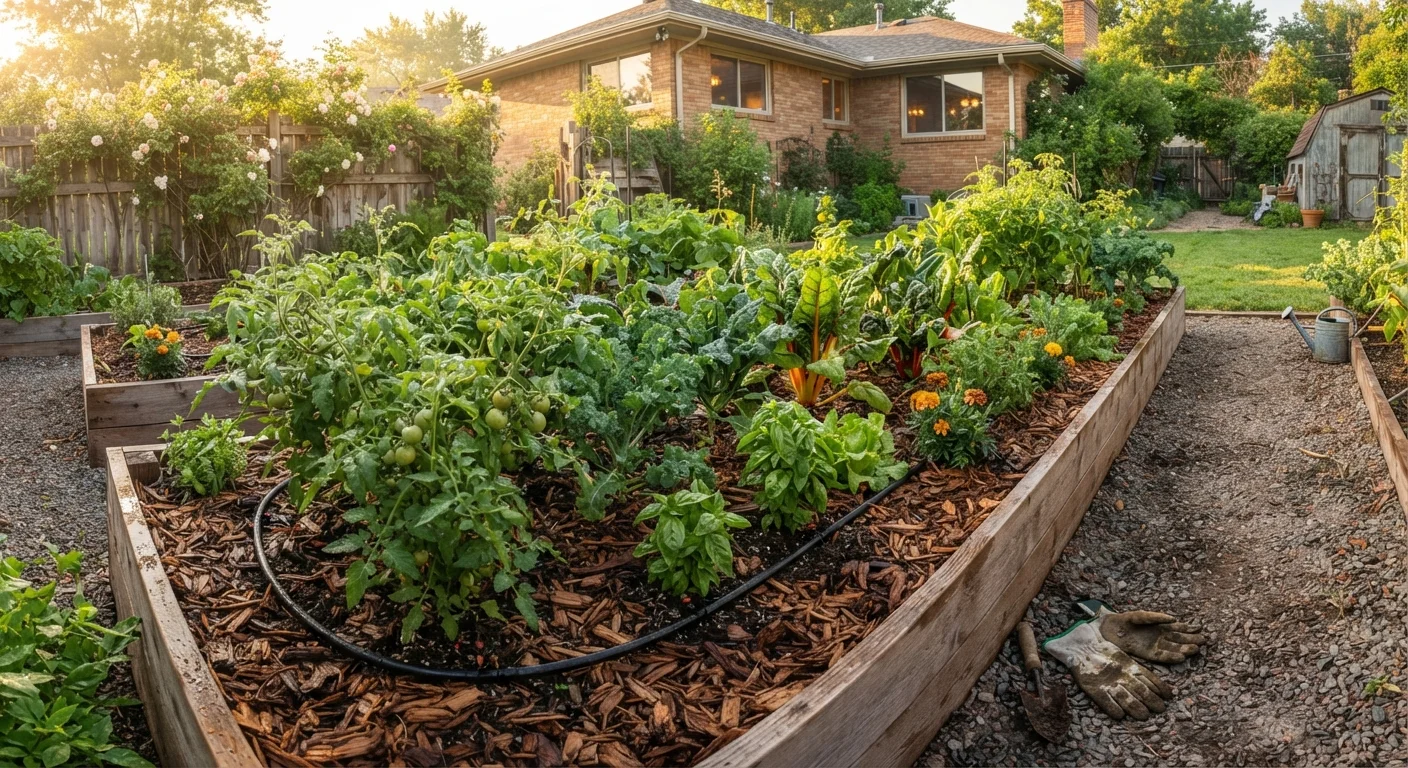
Lay 2 to 3 inches of organic mulch over all bare soil in garden beds.
Mulch slows evaporation from the soil surface, which is where most water is lost between waterings. It also moderates soil temperature and suppresses weeds that compete for moisture.
Water early in the morning, ideally before 9 a.m.
Midday watering loses a large fraction of moisture to evaporation before it reaches roots. Evening watering keeps foliage wet overnight, which can encourage fungal disease.
Use drip irrigation or soaker hoses instead of overhead sprinklers for vegetable beds and borders.
Overhead sprinklers wet leaves as well as soil, losing water to evaporation and potentially spreading disease. Drip lines deliver water at the root zone, where plants can actually use it.
Group plants with similar water requirements together in the same bed or zone.
Mixing drought-tolerant herbs with thirsty vegetables forces you to water everything to the level of the thirstiest plant. Separate zones let each group get what it actually needs.
Build up soil organic matter by regularly adding compost.
Sandy soils drain too fast and clay soils can become waterlogged, but both are improved by organic matter, which helps soil retain moisture at a level plants can access. Better structure means less frequent irrigation.
Timing and soil: the two factors most people overlook
Equipment matters less than timing and soil condition. A drip system on compacted, depleted soil still wastes water, because poor soil structure means moisture either pools on the surface and runs off or drains straight through before roots can absorb it. Compost improves both problems over time.
Timing is equally straightforward. Morning irrigation works better not because of plant biology but because cooler temperatures and lower wind mean less evaporation. If your schedule does not allow morning watering, a basic hose timer handles it automatically for around ten to twenty dollars at most hardware stores.
Rain gauge makes scheduling easier
A basic rain gauge costs only a few dollars and tells you exactly how much rainfall your garden received in a given week. If your beds got half an inch or more from rain, you can skip your scheduled watering without guessing. This one habit can prevent substantial overwatering across an entire season.
For families choosing between raised beds and in-ground plots, the watering implications differ too. Raised beds dry out faster but give you more control over soil quality. See the raised bed vs. in-ground gardening comparison for a fuller breakdown. If you want a lower-maintenance planting approach overall, low-maintenance perennials generally need far less irrigation than annuals once established.
Small habits that reduce waste starting today
Aside from the structural changes above, a few simple habits account for a lot of the water families use unnecessarily. The finger test for soil moisture is probably the most useful: it costs nothing and prevents the single most common watering mistake, which is irrigating on a fixed schedule regardless of recent weather.
Overwatering also affects houseplants, where the same misreading of watering needs is the most common cause of plant failure. The guide to why houseplants keep dying covers that in more detail.