

Key Takeaways
- Perennials return each season from the same root system, cutting annual replanting costs over time.
- Upfront plant costs are higher than annuals, but savings accumulate as plants mature and spread.
- Some perennials take one to two full seasons before they bloom reliably, requiring patience.
- Choosing species suited to your local climate and soil dramatically reduces ongoing care demands.
- Perennials are not completely maintenance-free: dividing, cutting back, and weeding are still needed.
Return each year without replanting
Because the root system survives winter, you do not pay for or plant the same species repeatedly. Over a five-year period, this alone can cut flower bed spending by a meaningful amount compared to buying annuals each spring.
Lower water needs once established
Most drought-tolerant perennials need regular watering only in their first growing season. After that, rainfall alone is often enough during normal summers in most U.S. regions.
Self-multiply over time
Many perennials form expanding clumps that can be divided every few years, giving you free plants to fill other areas of the yard or share with neighbors.
Support pollinators with little extra effort
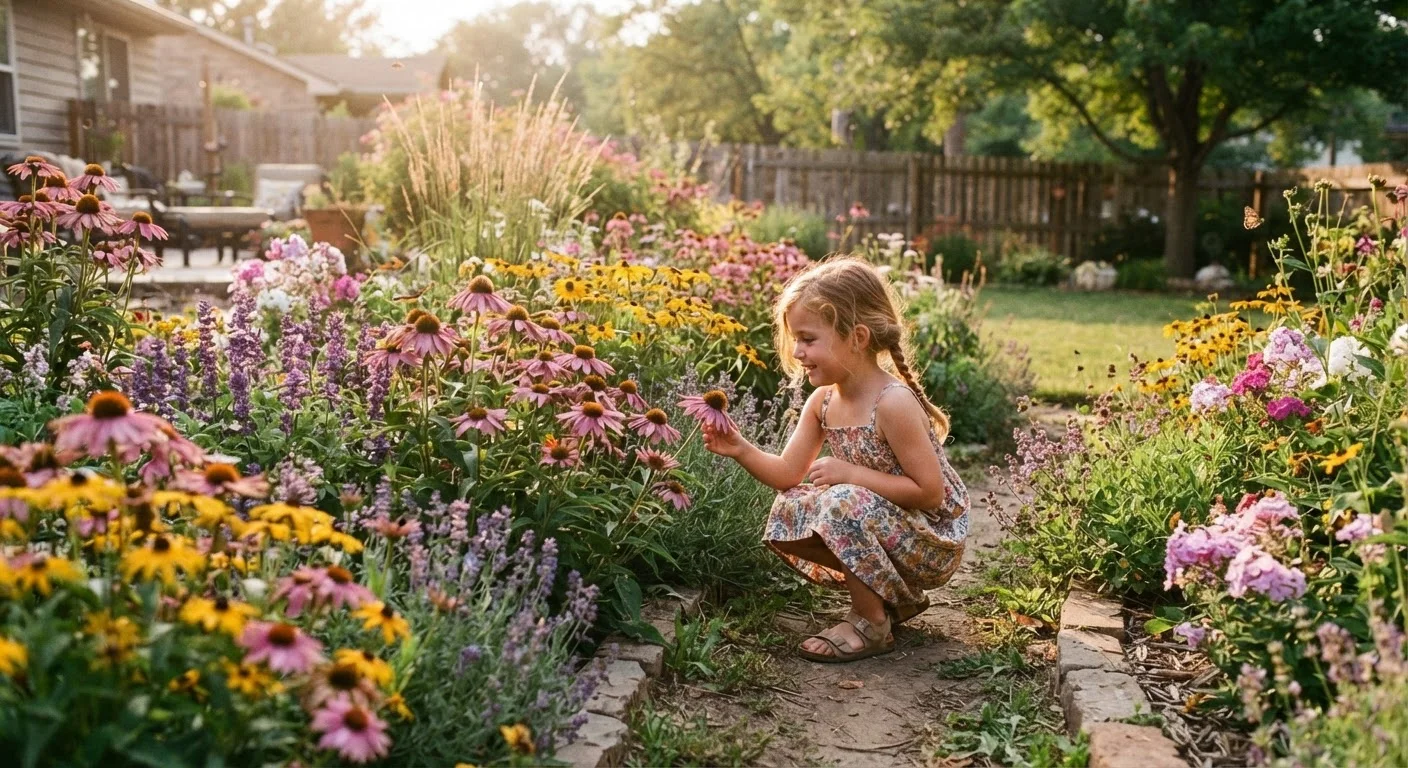
Native perennials like coneflower and black-eyed Susan attract bees and butterflies throughout the season, which also benefits any vegetable garden nearby.
Reduced ongoing labor compared to annuals
Once a perennial bed is established, the main tasks are cutting back dead growth in fall or spring and occasional dividing, not seasonal replanting.
Higher upfront purchase cost
A single perennial plant typically costs more than an annual bedding plant. Stocking a new bed requires accepting that the financial payoff comes in subsequent seasons, not immediately.
Slow to bloom in the first season
Most perennials spend their first year building root systems rather than producing flowers. Families expecting a colorful display right away may feel the garden looks bare or unfinished.
Some species spread aggressively
Bee balm, certain ornamental grasses, and spreading sedums can overtake a bed within a few seasons if not divided or edged regularly. Choosing well-behaved clumping varieties reduces this risk.
Still requires seasonal maintenance
Cutting back dead foliage, dividing crowded clumps, and managing weeds are ongoing tasks. "Low-maintenance" does not mean the garden runs without any attention.
Species selection mistakes are costly
Buying a perennial that is not suited to your climate or soil means losing that investment when the plant dies. Researching your USDA hardiness zone before buying prevents this common mistake.
Our Verdict
Low-maintenance perennials are a practical fit for families who want a garden that builds value over time without replanting every spring. The higher upfront cost and slow first-season performance are real, but for most households they are offset by reduced labor and long-term savings on plants and water.
Families with a modest gardening budget who can invest in setup costs now and prefer a hands-off routine once plants are established.
What low-maintenance perennials actually mean
A perennial is any plant that lives for more than two years, dying back in winter and regrowing from the same root system each spring. "Low-maintenance" in this context means plants that tolerate dry spells, resist common pests, and spread on their own without constant fertilizing or replanting. Examples include coneflower (Echinacea), black-eyed Susan (Rudbeckia), daylily, salvia, and sedum.
The term gets used loosely in gardening marketing, so it is worth clarifying: no garden runs itself entirely. Low-maintenance means less work compared to replanting annuals each year, not zero work. Families who go in with that realistic expectation tend to get the most out of these plants.
Advantages worth knowing before you plant
For a busy household, the biggest draw is time. Once established, most low-maintenance perennials need only spring cleanup, occasional dividing every few years, and basic watering during dry stretches. That frees up weekend hours that would otherwise go toward replanting or intensive feeding schedules.
Return each year without replanting
Because the root system survives winter, you do not pay for or plant the same species repeatedly. Over a five-year period, this alone can cut flower bed spending by a meaningful amount compared to buying annuals each spring.
Lower water needs once established
Most drought-tolerant perennials need regular watering only in their first growing season. After that, rainfall alone is often enough during normal summers in most U.S. regions.
Self-multiply over time
Many perennials form expanding clumps that can be divided every few years, giving you free plants to fill other areas of the yard or share with neighbors.
Support pollinators with little extra effort
Native perennials like coneflower and black-eyed Susan attract bees and butterflies throughout the season, which also benefits any vegetable garden nearby.
Reduced ongoing labor compared to annuals
Once a perennial bed is established, the main tasks are cutting back dead growth in fall or spring and occasional dividing, not seasonal replanting.
There is also a financial argument. Perennials cost more per plant at purchase, but you buy them once. A daylily or coneflower planted this year will still be producing blooms in five to ten years, often multiplying into plants you can divide and spread to other parts of the yard. Water-efficient gardening practices pair well with perennials because many drought-tolerant species need watering only during the first season while roots establish.
From a family health angle, having a low-stakes outdoor space encourages time outside. Fitting regular movement into family life does not require a gym, and even light gardening tasks get kids and adults outdoors and active.
Honest drawbacks to weigh
The case against perennials is also real, and worth understanding before spending money at a nursery.
Higher upfront purchase cost
A single perennial plant typically costs more than an annual bedding plant. Stocking a new bed requires accepting that the financial payoff comes in subsequent seasons, not immediately.
Slow to bloom in the first season
Most perennials spend their first year building root systems rather than producing flowers. Families expecting a colorful display right away may feel the garden looks bare or unfinished.
Some species spread aggressively
Bee balm, certain ornamental grasses, and spreading sedums can overtake a bed within a few seasons if not divided or edged regularly. Choosing well-behaved clumping varieties reduces this risk.
Still requires seasonal maintenance
Cutting back dead foliage, dividing crowded clumps, and managing weeds are ongoing tasks. "Low-maintenance" does not mean the garden runs without any attention.
Species selection mistakes are costly
Buying a perennial that is not suited to your climate or soil means losing that investment when the plant dies. Researching your USDA hardiness zone before buying prevents this common mistake.
Slow establishment is the most common frustration. Many perennials follow the old gardener's phrase: "first year they sleep, second year they creep, third year they leap." Families expecting full color in year one often feel disappointed. If your goal is immediate visual impact, a mixed approach using a few annuals alongside perennials in year one can bridge the gap.
Some perennials also spread aggressively. Mint, bee balm, and certain ornamental grasses can crowd out neighboring plants if not monitored. Choosing clumping varieties rather than spreading ones keeps this manageable without extra work.
Check your hardiness zone first
The USDA Plant Hardiness Zone Map divides the country into zones based on average minimum winter temperatures. A perennial labeled "low-maintenance" in Georgia may not survive a Minnesota winter. Checking your zone before buying is the single most effective way to avoid wasted spending. Your local cooperative extension office can also recommend species proven to perform well in your specific region.
How to set up a perennial bed without overspending
Start small: a 4-by-8-foot bed with five to seven plants is enough to see how a perennial garden behaves in your specific yard before expanding. Soil preparation matters more here than with annuals because the roots will live there for years. Mixing in compost before planting improves drainage and nutrition without requiring synthetic fertilizers later.
Buying bare-root plants in early spring or shopping end-of-season nursery sales can cut per-plant costs significantly. Dividing plants from neighbors or community garden swaps is another common way families stock a perennial bed at little to no cost. Raised bed versus in-ground setups each have implications for perennials: in-ground plantings tend to work better for deep-rooted species, while raised beds offer easier soil control in areas with heavy clay or poor drainage.
If you are also growing food, perennials and vegetables can coexist. Starting a vegetable garden on a tight budget covers the basics of food growing, and many perennial herbs like chives and thyme fit naturally into that kind of planting plan.