

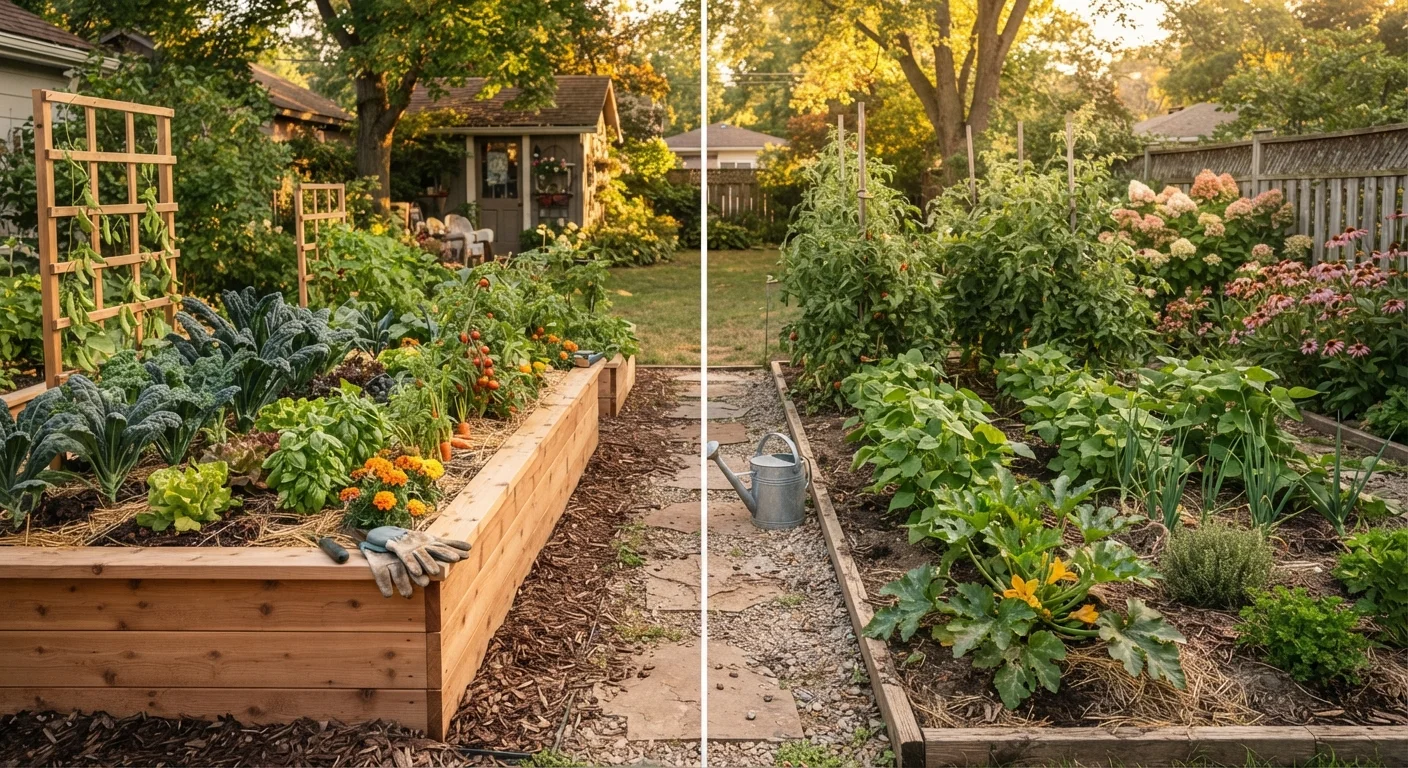
Key Takeaways
- Raised beds cost more upfront but give you immediate control over soil quality and drainage.
- In-ground gardening has a lower starting cost and works well when native soil is already decent.
- Raised beds can reduce back strain and limit some soil-borne pests, making them practical for many families.
- In-ground plots support larger plantings and deep-rooted crops with less ongoing soil expense.
- Either method can produce a productive family vegetable garden when set up and maintained correctly.
Our Verdict
Raised beds suit families dealing with poor native soil, limited mobility, or small defined spaces, and those willing to invest more money at the start for easier ongoing management. In-ground gardening is a better fit when budget is tight, the existing soil is workable, and the planting area is large. Both approaches grow nutritious food without requiring expensive equipment or professional help.
| Best for | Recommended |
|---|---|
| Families with compacted, rocky, or contaminated native soil | Raised bed |
| Budget-conscious growers with decent existing soil | In-ground |
| Gardeners with back or knee pain who need reduced bending | Raised bed |
| Families wanting to grow large quantities of vegetables or deep-rooted crops | In-ground |
What you are actually comparing
A raised bed is a contained growing area, usually a frame built from wood, galvanized metal, or composite boards, filled with a soil mix you bring in yourself. An in-ground garden is simply a patch of your existing yard soil, amended and worked as needed. Both methods grow the same vegetables, herbs, and fruit. The difference is in setup cost, soil management, and day-to-day usability.
If you are new to growing food at home, the practical introduction to starting a family vegetable garden covers soil prep and seed basics that apply to both methods.
| Raised bed | In-ground | |
|---|---|---|
| Starting cost | Moderate to high (frame plus soil fill) | Low (amendments to existing soil) |
| Soil quality control | Immediate, full control | Gradual improvement over seasons |
| Drainage | Reliable from day one | Depends on native soil type |
| Weed pressure | Lower, especially early on | Higher with established weed populations |
| Physical accessibility | Easier on back and knees | Requires more bending and kneeling |
| Space for large or deep-rooted crops | Limited by frame depth | Unrestricted root depth |
| Season length | Warms faster in spring | Slower to warm in cool climates |
Cost and setup
In-ground gardening costs almost nothing to start if you already have a spade and access to compost. You turn the soil, work in organic matter, and plant. A 4x8-foot raised bed frame, by contrast, can run anywhere from $30 for basic untreated pine to well over $150 for cedar or galvanized steel, before you add the soil mix. Filling a 4x8-foot bed to a depth of 12 inches takes roughly 16 cubic feet of material, which often means purchasing a blend of topsoil, compost, and other amendments.
Over several years, those upfront costs spread out, and you avoid buying soil repeatedly if you top-dress with compost each season. In-ground gardeners also add compost annually, but they are working with an existing base rather than building from scratch.
Soil control and drainage
This is where raised beds have a clear advantage for many families. If your yard has clay that holds water, sandy soil that drains too fast, or soil with a history of chemical use, a raised bed lets you bypass all of that. You fill the frame with a mix chosen for the crops you want to grow.
In-ground gardeners can improve native soil over time with compost, cover crops, and mulch, but that process takes seasons. Clay soil in particular may need several years of amendments before it drains reliably. If drainage is poor, plant roots suffocate and yields suffer.
Raised beds also warm up faster in spring, which can extend your growing season by a few weeks in cooler climates. That matters for families trying to get the most out of a short season. For strategies that work alongside both approaches, see these water-efficient gardening practices.
Pests, weeds, and maintenance
Raised beds sit above grade, which makes it practical to add a hardware cloth bottom to block burrowing pests like voles and gophers. Weed pressure is also lower in a fresh soil mix, at least in the first year or two. Over time, weed seeds blow in and the advantage narrows, though the defined border still makes weeding faster.
In-ground gardens contend with whatever pest and weed populations already exist in your yard. Persistent weeds like bindweed or quackgrass can be a real problem, and soil-borne diseases from previous plantings may linger. Crop rotation, which means moving plant families to different spots each season, helps in both setups but is easier to track in a raised bed layout.
Start small in either method
A single 4x4-foot raised bed or a 50-square-foot in-ground plot is enough for a first season. Managing a small space well teaches you how your specific soil, sun, and water behave before you expand. Overgrown first gardens are a common reason families give up on growing their own food.
Perennial plants present a separate set of tradeoffs for family gardens. The practical look at low-maintenance perennials is worth reading alongside this comparison.
Usability for families
Raised beds at 12 to 24 inches tall remove most of the bending that makes gardening hard on knees and backs. Children can reach into a raised bed without stepping on the soil, which matters because foot traffic compacts soil and hurts root growth. The contained shape also makes it easier to assign each family member a section.
In-ground gardens ask for more physical work: tilling, deep weeding, and kneeling. They do allow more flexibility in shape and size, and they support crops with deep roots, like carrots, parsnips, and winter squash, without the depth constraints of a shallow frame. A deep raised bed (at least 12 inches) handles most vegetables, but truly deep-rooted varieties benefit from the unrestricted space of open ground.
For general gardening resources on healthy, affordable home food production, the health and home improvement section covers related topics that may be useful as your garden grows.