

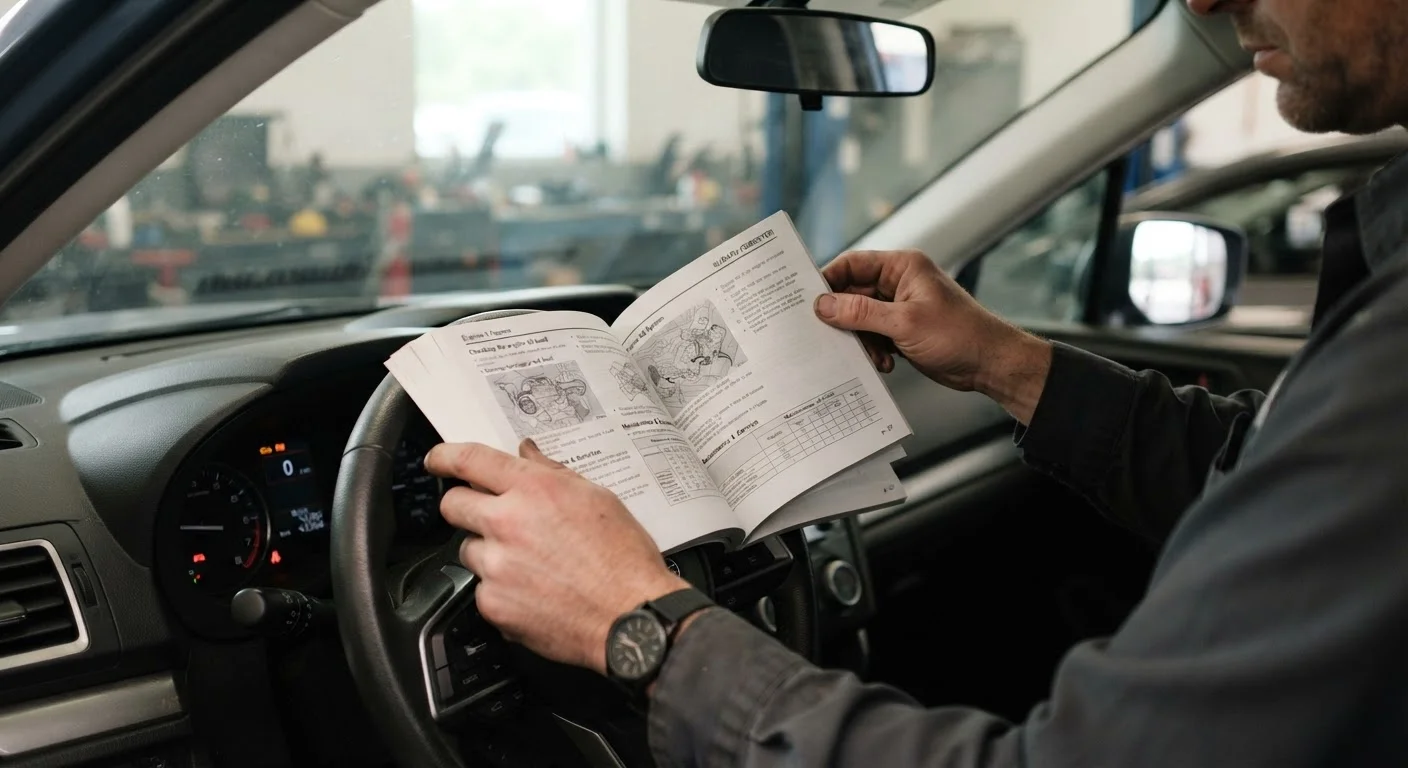
Key Takeaways
- Your owner's manual contains the only maintenance schedule that matches your specific engine and drivetrain.
- Skipping oil changes, tire rotations, and fluid checks typically leads to repairs that cost far more than the service itself.
- Many manufacturer intervals are longer than the old conventional wisdom, so checking the manual can save unnecessary service trips.
- Keeping dated service records protects resale value and helps diagnose problems faster.
Why the owner's manual is the right starting point
Most drivers ignore the owner's manual until something goes wrong. That is an expensive habit. The manual contains maintenance intervals calculated for your specific engine, transmission, and climate conditions, not generic averages invented by a quick-lube chain.
Manufacturers set these intervals based on engineering data from the actual components in your vehicle. A turbocharged engine, for example, puts more thermal stress on oil than a naturally aspirated one of similar displacement, so its oil-change interval may be shorter. The manual reflects that. A one-size-fits-all schedule does not.
Understanding what the manual actually says also helps you push back on upsells at the service counter. If your manual says your transmission fluid is good for 60,000 miles and you are at 30,000, you have documentation to decline a flush you do not yet need. For a fuller picture of how maintenance spending fits into total vehicle cost, see what car ownership costs American families over time.
The maintenance tasks that matter most
Follow the oil change interval in your owner's manual, not the sticker on your windshield.
Many modern vehicles with full synthetic oil can go 7,500 to 10,000 miles between changes, well beyond the old 3,000-mile rule. Changing oil too early wastes money; changing it too late accelerates engine wear. The manual specifies the correct interval for your engine.
Rotate tires at the interval your manual specifies, usually every 5,000 to 7,500 miles.
Front and rear tires wear at different rates depending on whether a vehicle is front-wheel, rear-wheel, or all-wheel drive. Regular rotation evens out that wear, extending tire life and maintaining predictable handling. Uneven wear discovered too late means replacing tires before they reach their rated mileage.
Check and top off all fluids at every oil change, including coolant, brake fluid, and power steering fluid.
Fluids degrade and can leak slowly without obvious symptoms. Low coolant risks overheating; low brake fluid can signal a leak or worn pads. Catching these at a routine visit is far less disruptive than roadside failure.
Replace cabin and engine air filters on the manufacturer's schedule.
A clogged engine air filter reduces combustion efficiency and can cause rough idling and increased fuel use over time. A dirty cabin filter reduces HVAC airflow and can strain the blower motor. Both filters are inexpensive and straightforward to swap.
Inspect brake pads at each tire rotation and replace them before they reach the wear indicator.
Brake pads have a built-in metal indicator that squeals when the pad material is nearly gone. Waiting until that squeal appears is cutting it close. Replacing pads before the indicator hits protects rotors, which are significantly more expensive to replace than pads alone.
Staying current on these items also makes pre-trip inspections faster and more reliable. If you are planning a long drive, this road trip prep checklist walks through exactly what to verify before you leave.
What skipping service actually costs
$1,500+
Typical cost of a radiator replacement
Compared to roughly $50 to $100 for a coolant flush that can prevent corrosion-related radiator failure over time.
~$250
Extra cost when rotors need replacing with pads
Brake pads replaced before wear indicators damage rotors cost significantly less than a combined pad-and-rotor job at most independent shops.
Deferred maintenance rarely stays cheap. A $50 coolant flush avoided today can become a $1,500 radiator replacement within a few years if the degraded coolant begins corroding aluminum components. Worn brake pads do not just reduce stopping power; they score the rotors, turning a $150 pad replacement into a $400 pad-and-rotor job.
The pattern repeats across almost every system. Oil that runs past its service life breaks down and leaves varnish deposits in tight engine passages. Those deposits restrict oil flow, accelerate wear on bearings and camshafts, and eventually lead to the kind of engine damage that no maintenance budget can absorb easily.
Planning for these costs in advance is more manageable than most families expect. This guide to routine maintenance costs breaks down realistic annual figures for common services. For a broader view of vehicle expenses that catch families off guard, see what families often overlook when budgeting for a vehicle.
Building a simple maintenance habit
Good records matter almost as much as the service itself. A dated invoice showing consistent oil changes, brake inspections, and fluid replacements gives a future buyer confidence and often supports a stronger resale price. It also gives any mechanic a clear history to work from when diagnosing an unusual symptom.
The same discipline that keeps a vehicle running well applies to your home. Seasonal home maintenance tasks follow a similar logic: small, regular attention prevents the large, disruptive repairs. The underlying principle is the same whether the asset has four wheels or four walls.