

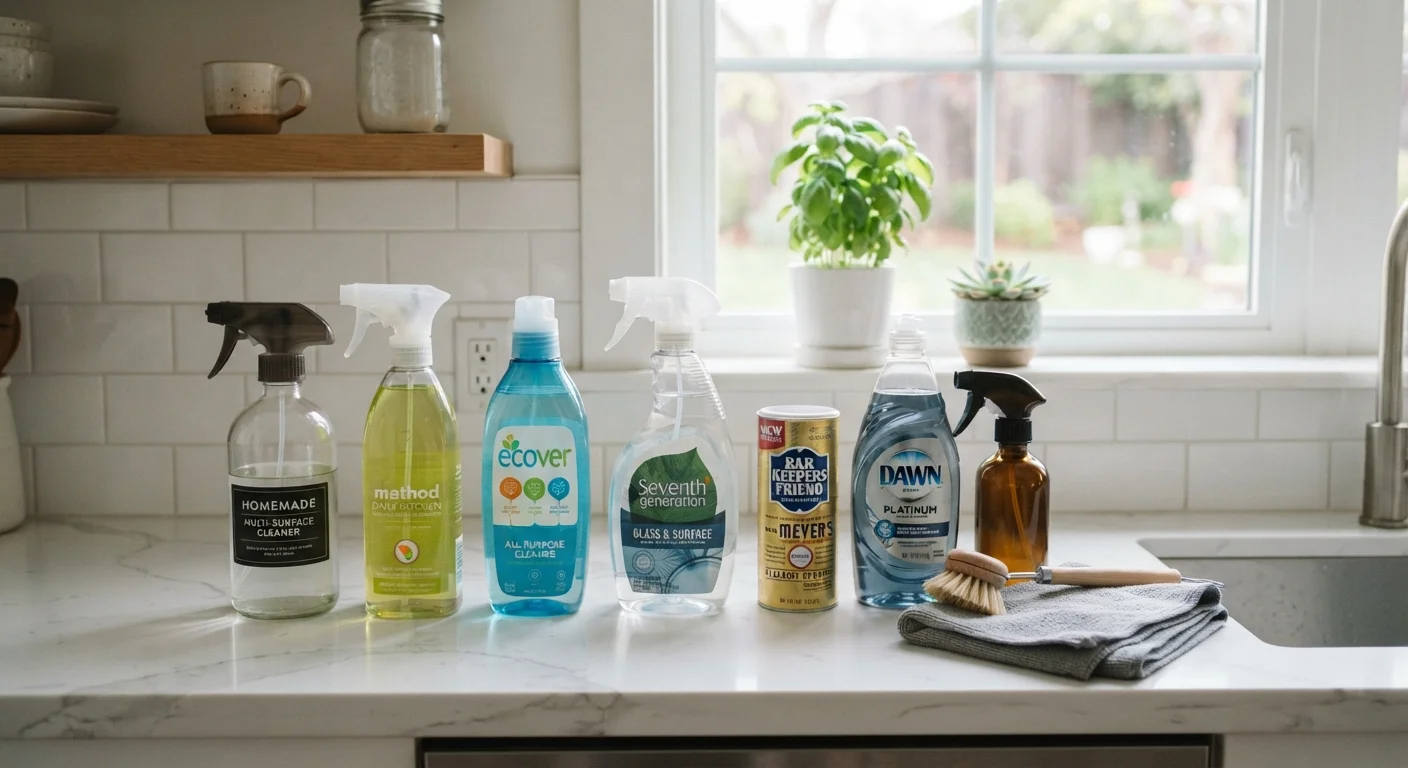
Key Takeaways
- More expensive cleaning products do not always clean better than basic, affordable alternatives.
- Antibacterial soaps offer no proven advantage over regular soap for everyday household use.
- Mixing common cleaning products like bleach and ammonia can create dangerous gases.
- Natural or homemade cleaners work well for many tasks but are not universally safer.
- A clean-smelling home is not the same as a germ-free or chemically safe one.
Why cleaning product myths cost families money
American households spend billions of dollars each year on cleaning supplies, and a significant share of that spending is driven by assumptions that do not hold up to scrutiny. Premium labels, antibacterial claims, and 'natural' badges all add to sticker prices without necessarily adding to results. For families watching their budgets, understanding what cleaning products actually do, and what their labels are designed to imply, can meaningfully reduce spending without reducing cleanliness.
The health and home connection is real, but it does not require a cabinet full of specialized products. Most effective household cleaning comes down to a few well-understood principles: appropriate concentration, contact time, and mechanical action (scrubbing or rinsing). Marketing rarely mentions those factors because they do not sell premium SKUs.
Myth
More expensive cleaning products work better and are worth the premium price.
Fact
Price reflects marketing and fragrance more often than cleaning performance. Basic formulas frequently match or equal premium products on common household surfaces.
Many store-brand or generic cleaners contain the same active ingredients as their pricier counterparts in nearly identical concentrations. The U.S. Federal Trade Commission has noted that product labeling and packaging are primary drivers of price differences in consumer goods, including household cleaners. Spending more does not guarantee better results on grease, soap scum, or everyday dirt. Comparing ingredient lists rather than brand names gives families a more reliable guide to what they are actually buying.
Myth
Antibacterial soaps and cleaners protect your family better than regular soap.
Fact
The U.S. Food and Drug Administration determined that consumer antibacterial soaps containing triclosan or triclocarban are no more effective than plain soap and water for preventing illness.
In 2016, the FDA finalized a rule removing triclosan and 18 other active ingredients from over-the-counter consumer antibacterial washes, citing a lack of evidence that these ingredients provided added health benefit. For routine handwashing, plain soap mechanically removes pathogens from skin surfaces. Routine use of antibacterial products can also contribute to antimicrobial resistance, a concern raised by public health agencies. Standard soap and water, used correctly for at least 20 seconds, remains the recommended approach for everyday hand hygiene.
Myth
Mixing cleaning products makes them stronger and more effective.
Fact
Combining products such as bleach and ammonia, or bleach and vinegar, produces toxic gases that are dangerous to inhale.
Bleach mixed with ammonia-based cleaners releases chloramine vapors, which irritate the respiratory tract and can cause serious harm in enclosed spaces. Bleach combined with acidic products like vinegar produces chlorine gas. These are not edge cases: many standard bathroom and glass cleaners contain ammonia. The CDC advises storing and using cleaning products separately and never combining them unless the product label explicitly permits it. Good ventilation matters when using any chemical cleaner, even one used on its own.
Myth
Natural or plant-based cleaners are always safer for your family and pets.
Fact
Natural origin does not equal non-toxic. Some plant-derived compounds are irritants or allergens, and essential oils can be harmful to pets.
The word 'natural' has no regulated definition in the cleaning product space in the United States, so it carries no guaranteed safety standard. Citrus-derived solvents, for example, can irritate skin and eyes. Certain essential oils commonly added to DIY or commercial natural cleaners, including tea tree, eucalyptus, and peppermint, are toxic to cats and dogs even in small amounts. Families with pets or young children should check ingredient lists on all cleaners, not just conventional ones, and store every product out of reach regardless of its marketing claims.
Myth
A strong chemical smell means the product is working harder.
Fact
Fragrance in cleaning products signals scent, not cleaning power. Strong smells can indicate poor ventilation or irritating volatile compounds rather than effectiveness.
Manufacturers add fragrance primarily for consumer perception. Scent has no bearing on a product's ability to remove bacteria, grease, or stains. Some fragrances contain volatile organic compounds (VOCs) that degrade indoor air quality with repeated use in poorly ventilated spaces, according to the Environmental Protection Agency's indoor air guidance. A product that cleans effectively but leaves no strong odor works the same way chemically. If a cleaner requires more ventilation than a room provides, that is a practical reason to switch products, not a sign of extra strength.
What the evidence actually supports
The myth-and-fact pairs above point to a consistent pattern: what works in cleaning is usually simpler and cheaper than the product landscape suggests. Disinfection, when it is genuinely needed, requires an EPA-registered disinfectant used according to label directions, including the specified contact (dwell) time. Many people spray and immediately wipe, which does not give disinfectants enough time to work. Reading and following directions matters more than spending more.
For routine surface cleaning where disinfection is not the goal, dish soap diluted in water handles most kitchen and bathroom tasks. Abrasive surfaces respond to baking soda. Vinegar cuts mineral deposits from faucets, though it should never be used on natural stone surfaces, which it etches. These are not fringe claims: they align with guidance from extension services at land-grant universities and consumer testing organizations.
If your household already handles the basics well, you may find it useful to review your broader seasonal home maintenance checklist, where small preventive habits keep surfaces and systems in better shape with less intensive cleaning later.
Staying safe while cleaning effectively
The most important safety rules around cleaning products are not complicated. Never mix products unless the label explicitly permits it. Work in ventilated spaces. Store everything in original containers with lids secured, out of reach of children and pets. Check labels before buying, not just for active ingredients but also for safety warnings that reveal what the product actually contains.
Families who want to reduce chemical load in the home can do so incrementally: swap one or two products at a time, test on small surfaces, and pay attention to what actually performs. There is no need to overhaul everything at once or spend more to feel clean.
This article is for general informational purposes only. It does not constitute medical, safety, or professional cleaning advice. Always follow manufacturer instructions and consult relevant safety resources for questions about chemical exposure or household safety.